
Any models to declare?

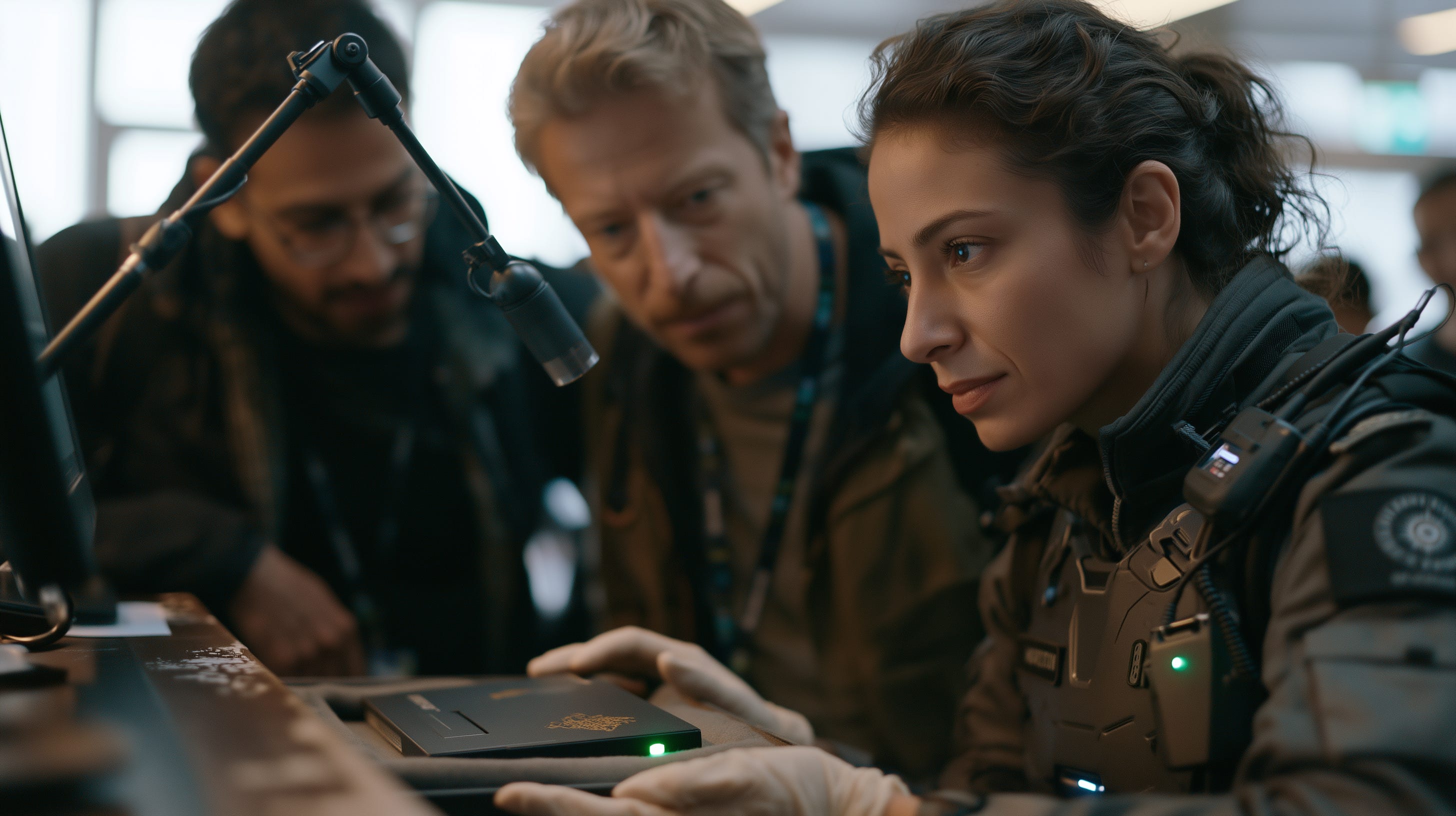
By the time they reach customs, the layover has taken most of their patience, and the connecting flight has taken the rest. Their luggage roller trails behind them, avoiding their ankles with algorithmic precision. An airport employee holds up a placard directing the crowd towards different lanes.
- Any goods to declare? Turn left. Any models to declare? Turn right. Both? Straight ahead.
Most software crosses borders as encrypted traffic. Clinical models are different. The weights, adapters, activation keys, and audit trail all have to cross the border together, sealed into the same object. They queue up at the digital customs lane.
The deployment lead puts a small case on the induction pad, and the line’s kiosk reads the pre-filed declaration.
Manual confirmation required. Proceed to Counter 11: Declared Clinical Models and Medical Decision Systems.
His analyst frowns, even though they have both been expecting this since check-in.
- Is this the sovereignty check?
- Probably. Let’s move on.
Counter eleven has a laminated card explaining why digital medical artefacts need physical inspection. The edges are worn, as if too many passengers have had to read it twice.
The officer pulls out a scanner on a swing arm. Beneath it, a tray slides out, lined with dark anti-static material. She sounds calm, like she has already seen everything at least twice.
- Afternoon. Declaration came through. I’ll need the module and both of you to confirm the carrier status.
They place the case on the tray. The deployment lead takes off his glasses and leans toward the scanner. It reads his face, then his palm, then matches both against the carrier licence attached to the declaration.
- Can you open it for me?
The lead opens the case. Inside, a status light blinks on a matte-black module, roughly the size of a hardback book, with a tamper-proof seal across the data port. One side panel shows the model ID, and a gold clinical-security mark etched into the casing. The officer looks at the module and reads from the scanner’s screen.
- Astra-RX platform. Clinical intelligence suite. Foundation model with restricted clinical decision-support use. What’s the scope of this one?
- Diagnostic support, advanced therapy planning, and safety monitoring. The specialist adapters are for antimicrobial optimisation and personalised phage candidate design for resistant infections.
- So, not one thing?
- Not one thing.
The officer nods, looking up at them.
- My husband’s a radiologist. He says the useful systems are never the ones that do one thing. Those get bolted on and quietly die, never updated. Who’s the receiving authority?
- Cross-border consortium. Four hospital groups in two jurisdictions. It gets installed inside each hospital’s isolated local data centre. Patient data can’t travel, so the model does. This is the first deployment, and the pilot site is the coordinating centre.
- Hmm. That’s why you’re carrying it rather than uploading it?
- Partly the data sovereignty requirements. But also because the first activation has to be witnessed by all parties, as nobody would want a clinical model activated without all the sign-offs.
The officer adds a note and swings the scanner arm over the module.
- Connectivity check first.
The scanner hums as a passive RF sweep checks for radio, cellular, Bluetooth, or mesh signals. One by one, the indicators turn green. Clean. Then it looks deeper, searching the firmware for callback addresses, telemetry hooks, or anything designed to wake up after activation. The display returns a single line.
No active or dormant external connections detected.
The officer frowns slightly at something else on the screen.
- Our jurisdiction requires a formal waiver of foreign monitoring rights before a clinical model enters our health data perimeter. Once it crosses, no foreign endpoint can still be attached to it. Do you have authorisation to sign?
- I do.
The deployment lead lets out a long sigh, then swipes through the waiver.
Vendor monitoring rights surrendered. Check.
Foreign quality endpoint disabled. Check.
Local accountability begins at activation. Check.
The officer logs it and pulls on inspection gloves. Then she breaks the tamper seal on the data port. It peels away cleanly, leaving a faint date stamp on the material. His analyst looks closer, interested.
- Does breaking the seal change anything inside?
The officer shakes her head.
- Nothing. The seal is on the casing, not the model weights. It only proves nobody opened the port in transit.
The officer connects an inspection cable between the module and her terminal. After a few seconds, a chime confirms the hashes still match the origin record.
- So this is for the infections where the usual drugs stop working?
- Exactly. It’s for the cases that scare everyone.
The officer nods, reaching under her desk for an equipment tray. On it: a new tamper-evident seal, slightly different from the original one. A little wider, with a holographic strip and a jurisdiction code along one edge.
- This is your border seal.
She applies it across the data port with practised precision.
- Your destination facility will need to log the seal number when they take custody.
The officer hands them the inspection card and taps her terminal.
- You’re good to go.
The signs adjust as they leave, guiding them by the shortest open route to their transfer. They walk out through the automatic doors into the arrival hall. Outside the terminal, their transfer awaits with the consortium’s name blinking on its side. The analyst adjusts the strap as they approach its opening door.
- Well, that was way smoother than I expected.
- I told you not to worry about this part. That was easy. Now we “just” need to plug this into twelve hospitals where even deadlines need a second opinion.
The transport’s door closes with a hiss.

Memories to build from this future
Go back to a time you left something that mattered to you in someone else’s hands. Maybe it was your car with a mechanic, a piece of work with the one person whose verdict you feared, or a pet with a sitter on your first trip.
You wanted to stay and explain it one more time but you forced yourself to walk away instead, and for the rest of the day you felt that small, restless pull of something you could no longer reach.
Now, stay with the trust it took:
1. Think back to a time when you let an AI take on something that genuinely mattered: a health problem, a financial decision you couldn’t undo, or a worry about someone you love.
What did it take before you trusted it with something that important?
When did you double-check its thinking, and when did you just let it carry the weight?
Which decisions did you always want to keep as your own, no matter how much you came to trust it?
2. Try to recall a time when a powerful new AI tool could redefine what your team’s work was worth, and you set out to win over the rest of your organisation to adopt it.
What had the tool shown you your team’s work could be worth?
How did you bring on board those people who weren’t ready to adopt it?
Which work did your team finally get to take on once the organisation backed it?
3. Go back to a time when working with external partners no longer meant revealing anything sensitive, because a shared AI had become the way you all worked across boundaries.
What kind of partnerships became possible once no one had to expose what they protected?
How did trust between organisations grow once no one had to lay their sensitive information bare?
Which problems could your whole field finally take on together that no one was able to tackle alone before?
To round this one off.
If the hard part of a change you can see coming turned out to be trust, not technology, what would you put your energy into now?
What small experiment would you be curious to begin with? And does anything from this one tie to ideas from other sessions?
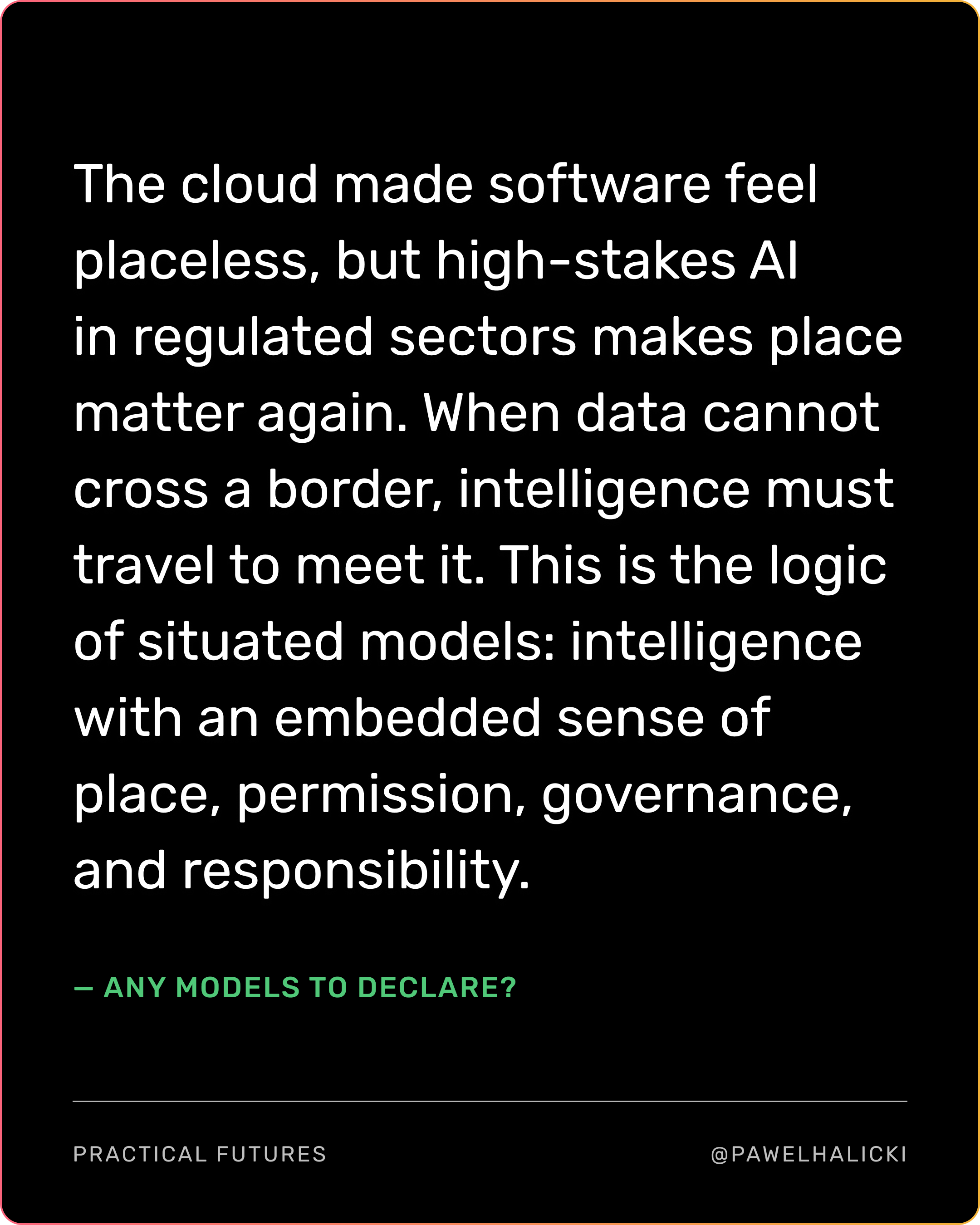
Each memory from the future you build sharpens your strategic instincts for the decisions ahead.
Build enough memories.
Shape better futures.
The science behind rehearsing the future.
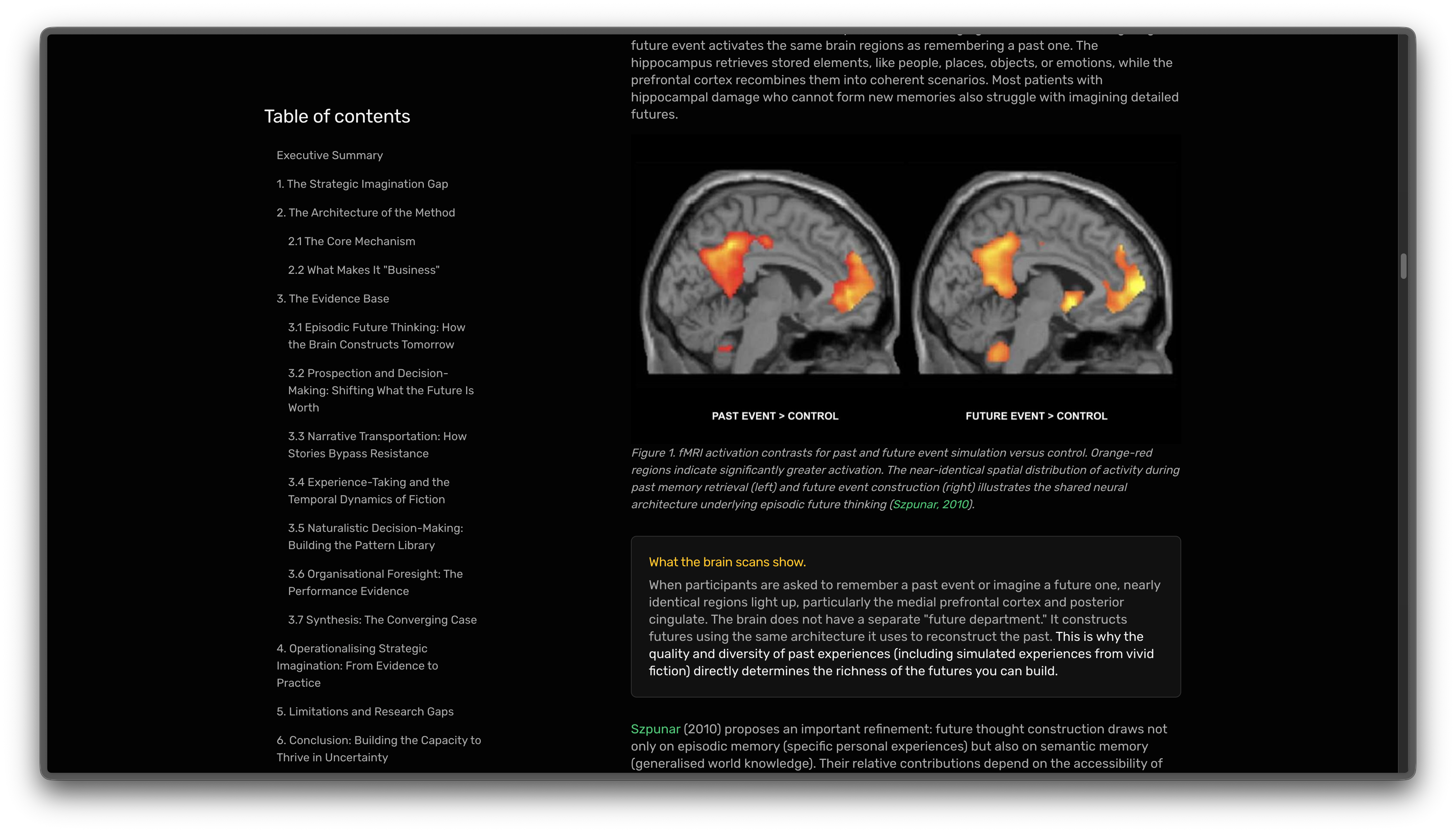
How science fiction trains your brain to thrive in a world that refuses to be predictable.
Know someone who could use more strategic imagination?
Share Practical Futures with your network.