
Chance engineering?

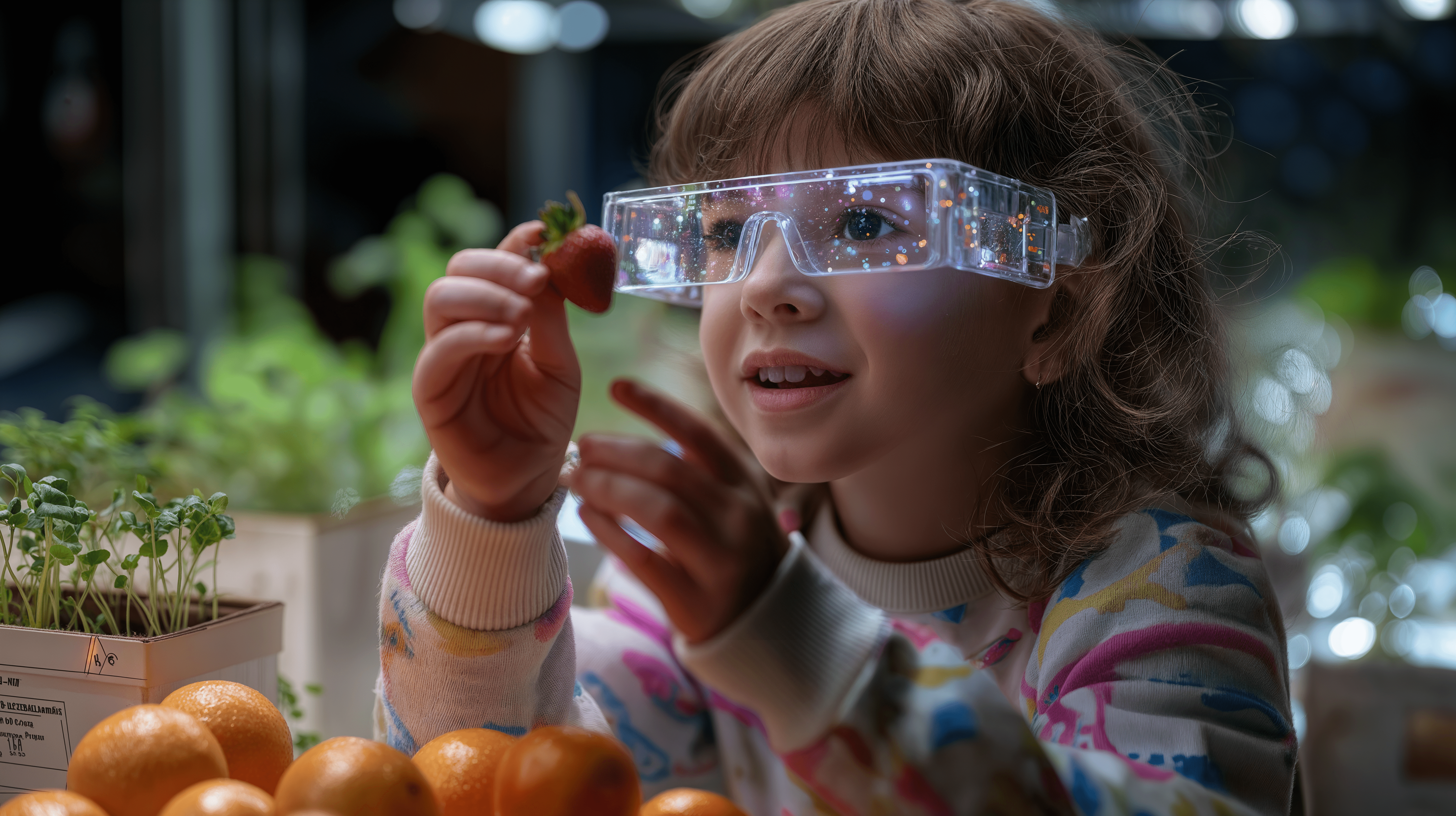
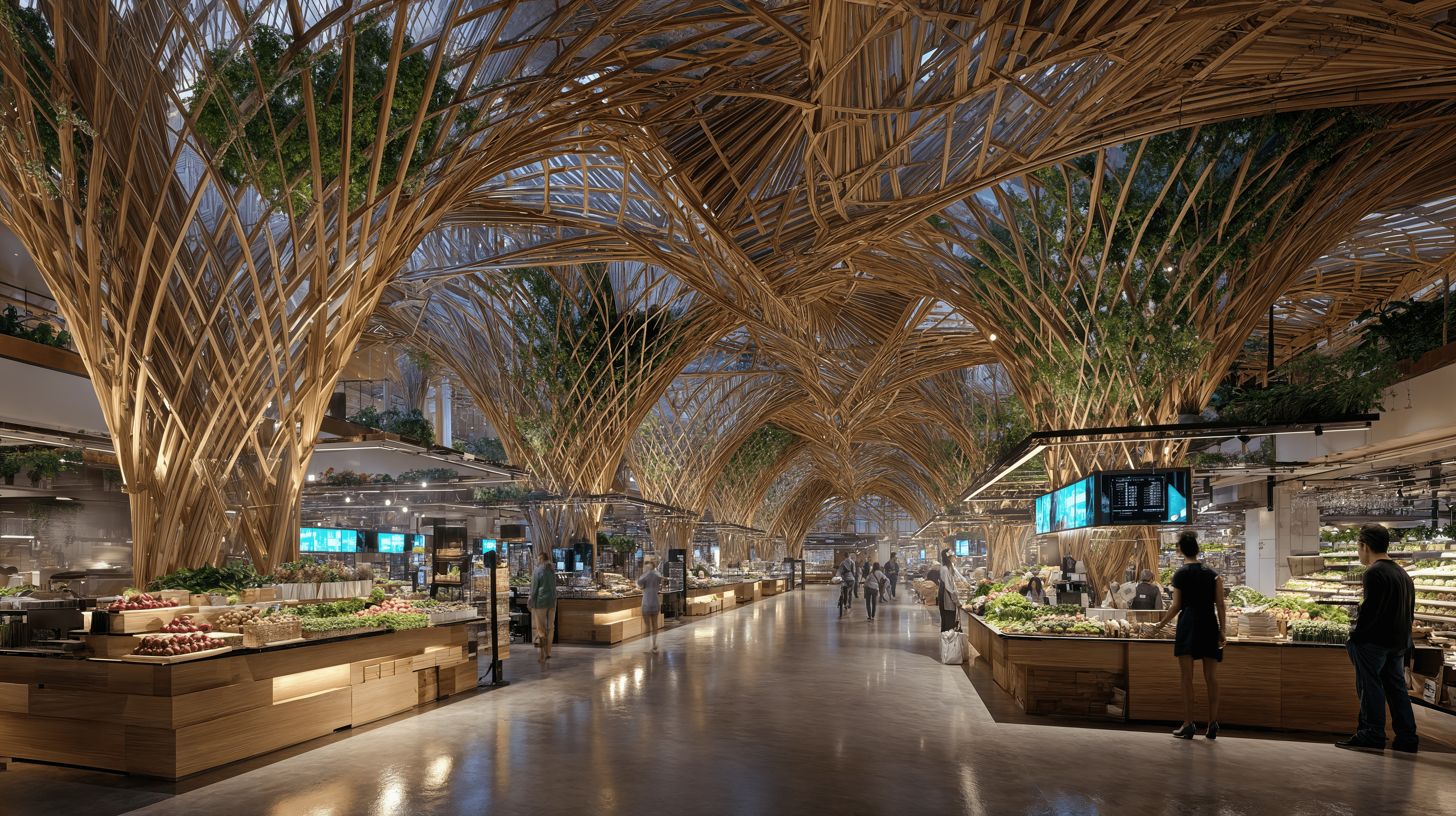
Halfway through the fruit and veg section, she spots two familiar faces walking through overlapping shelf projections, recipe pop-ups, and flashing promo prices tuned to what’s in her cart.
- Hello, hello, how are you?
- Wait. You’re here? What are the chances?
- Actually? Pretty high. In a city this dense, one-in-a-million happens every minute.
She fistbumps the kid and parks her overstuffed cart to the side.
- Look at you. Love the glasses. How old are you now?
The shy girl shows five fingers.
- Five years? Already? Whoa, I have unread emails older than you.
- Time flies. Last time we talked, you were teaching microwaves how to overheat my leftovers for less. Are you still doing that?
- Ha, pricing the machine-to-machine economy was fun, but I moved on.
- Oh. So what have you been up to recently?
- Engineering chances at big companies.
- Chance engineering?
- Mm-hm. It’s a big thing now.
- So what is that? Trying to make people lucky?
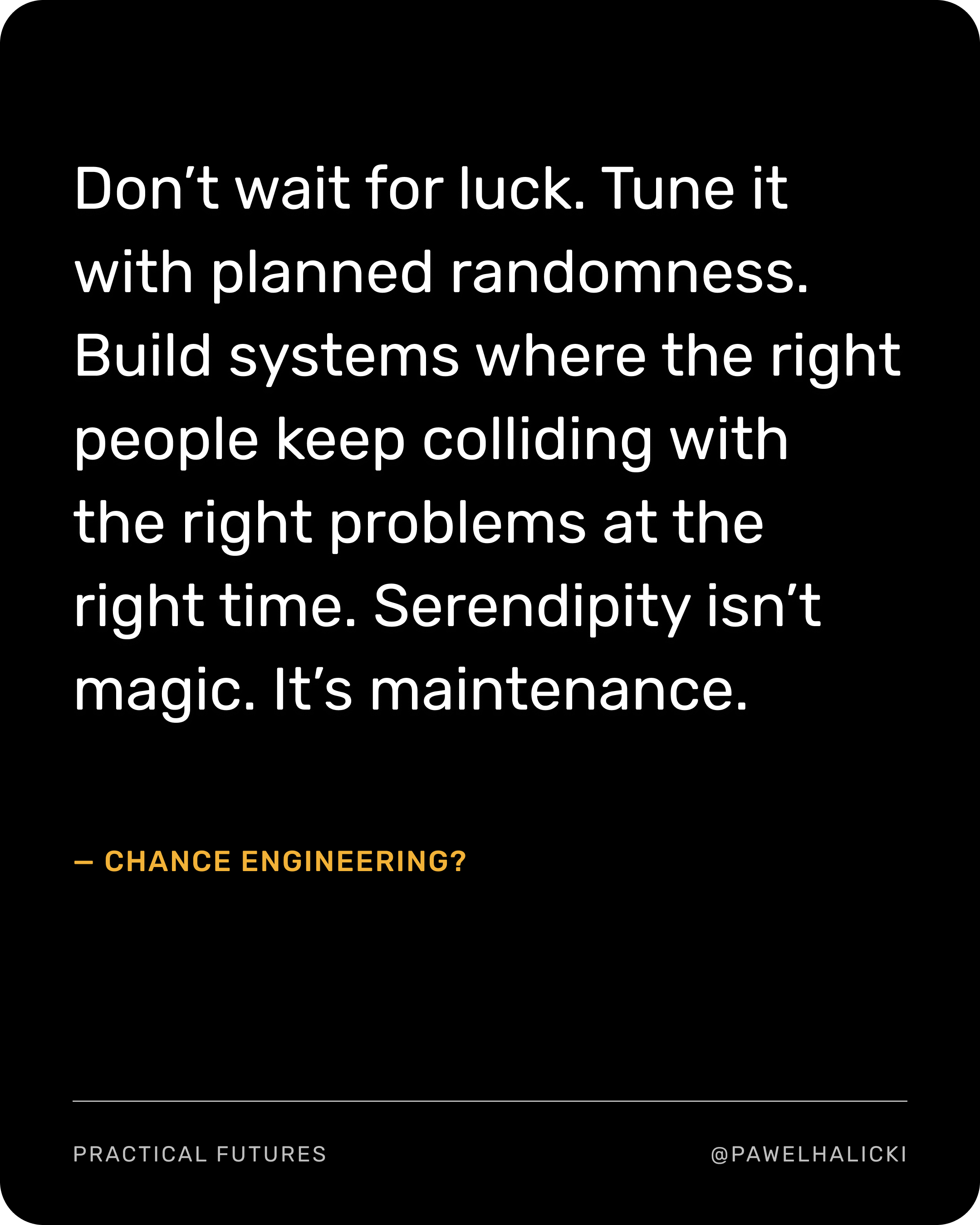
- Not luck. Motion. We quietly move calendars, desks, and lunch routes so people accidentally run into each other. Eventually, problems bump into the right solvers, and ideas land in front of the one person who’ll run with them. There is a lot of opportunity in randomness.
- One-in-a-million events?
- More like nudged accidents. We track and tune collision rates because things rarely happen for just one reason. With enough movement, data, and potential contact points, you get useful chain reactions almost on a schedule.
The girl tugs on her mum’s leg, interrupting them.
- Mum, I’m bored. Can I play my game?
- You’re out of game time. Do education mode instead. Why don’t you count those oranges?
The girl looks at the pile.
- 179
- Wow. She’s good.
- Nah, it’s the glasses. Education mode turns whatever’s in front of her into a mini lesson, so she keeps exploring instead of zoning out. Why don’t you switch to microscope mode? Grocery stores are basically a zoo if you zoom in.
The girl taps the control at her temple, slips the glasses off, and holds them up to random fruit. Each time, the lenses bloom with a magnified view and tiny labels.
- It’s wild how fearless they are with new tools. She’ll poke at anything.
- Yeah. Kids don’t worry that an experiment will get logged against their record one day. We do.
- Fun fact: when shopping carts first showed up, people wouldn’t touch them because they thought they looked silly. The inventor literally hired actors to walk around using them until everyone felt it was a normal thing to do.
- You should visit us for dinner next time. How long are you staying? With the cart this full, it’s at least two weeks, I guess?
- I planned on staying for a few weeks.
- Perfect. Odds are you’ll have time.
- Haha. I’ll let our calendars fight it out. Anything after next week.
- Come hungry. We’ve got a batch of new trial greens and veggies coming up in the grow pod. You’ll taste-test for us.
They hug goodbye.
- You’re too kind.
- Well, that’s a nice problem to have.
As she moves, the store updates her promo reel with limited-time neighbour pricing. She steers back into the aisle, muttering at the cart.
How many happy accidents are actually planned randomness?
Memories to build from this future:
1. Try to recall teaching a loved one to see through smart glasses in public spaces:
Did they trust what they saw with their eyes or what the glasses showed them, and did their answer matter to you?
What question did they ask that made you rethink how you use augmented spaces?
How did you explain the difference between learning tools and being watched?
What can they do effortlessly that you had to learn the hard way, and how did that shift how you guide them?
2. Think back to the first month when engineered collisions became normal in your workplace:
Who resisted arranged run-ins the most, and what did that tell you about your company?
How did you tell the difference between helpful accidents and annoying interruptions?
What collaboration happened that your org chart said would be impossible?
3. Try to recall tuning your first system to make the right people bump into each other:
Which factors actually predicted useful meetings versus wasted time?
How did you mix planned randomness with real unpredictability?
What problem got solved because the right expert walked past the right question at exactly the right moment?
How did you explain that orchestrated accidents need to be measured differently than planned meetings?
Each memory from the future you build sharpens your strategic instincts for the decisions ahead.
Build enough memories.
Shape better futures.
Know someone who could use more strategic imagination?
Share Practical Futures with your network.