
Sorry, my frames think you’re someone else


Rain or sunshine, at this hour the line at the corner bakery is the local landmark. The doorbell rings every time customers enter, shaking the weather off their clothes. When the queue moves again, the Possible Menu above the counter refreshes.
IF THE RAIN HOLDS: cinnamon knots, oat rolls, dark crust
IF THE RAIN CLEARS: picnic bread, herb flats, fruit twists
IF THE QUEUE HOLDS: proxi-bread at ten
Just as he moves into third place in line, a hand lands on his shoulder.
- Hey man, long time no see.
- Do I know you?
- Sorry, my frames think you’re someone else.
- Oh really. Can I ask who?
- Nah, I’m messing with you. My frames are picking up a side-project pattern around you.
- Your glasses pick folks with side projects?
- They just connect the dots between public sources. Sorry to bother you. Is my filter right?
- Guilty as charged. I run Fermentathons after work. Are you here for the sourdough contest kit? They’re still handing them out before the microbiome market.
- Not this time. But I love the idea of proxi-bread. The hyper-local flour makes me feel like a better person, so thank you for your service. Listen, I work for a sourcing agency. We look for people who build things before anyone asks them to.
- Okay?
- Everyone can do anything now, yet hardly anyone actually does. That gap is our business.
- I’m an analyst who likes bread…
- No, no. You act on your ideas, and you’re persistent. This is what our clients are looking for.
- And what are they looking for exactly?
- People who do things without waiting for permission. Clients call them high-agency. I try not to. Most companies don’t buy tools anymore. They assemble workflows on their own stacks. What they need are ideas to plug in and people who can build stuff before they’re asked to. As the saying goes, software ate the world, but for AI, software was just a snack. Sorry, that sounded better in the agency deck.
- I’m just running community contests for small bakeries and fermentation nerds.
The stranger smiles like the objection just improved his commission.
- Listen, you’re an analyst demonstrating initiative. Mind if I log your skill set and start matching opportunities? If we have a serious match, I’ll get back with an offer worth your time.
He looks at the menu, hesitating a little longer than necessary and nods.
- Fine. It’s my yes-and-day after all. Let’s do it.
Recording marks appear on the rims when the stranger switches his frames to formal capture. The analyst looks straight into them.
- This is me giving formal consent to profiling and one follow-up thread. On one condition: you come to the microbiome market this weekend.
The frames chime. Condition attached.
- Man, that’s some smooth negotiation.
- Not as smooth as my latest proxi-bread. My orange zest sourdough is leading the starter board this month.
The line moves, and the menu rotates promoted items on display. He points at the closest tray.
- Get those cinnamon knots before the rain changes its mind. They make any Monday great.
- And I thought you’d hate getting pitchslapped in public.
- No worries. In this city, you get what you pitch for.

Memories to build from this future
Think about the last time someone you didn’t know asked what you do. You gave a short answer: the title, the company. Then, for a second, you thought about another reply: the thing you make or grow or organise after hours, the one nobody asked for, the one that changes your voice when you finally talk about it.
Now, stay with that answer:
1. Think back to the evening when you finally shared an idea you had carried for a while with your workspace. By the next morning, it was real, live, and finding its first users without you.
How did it feel to meet a working version of something that had only ever lived in your head?
What surprised you about its first users, compared with the audience you had been imagining?
Which ideas did you start taking seriously once turning your idea into reality cost you an evening, not a year?
2. Try to recall the quarter when your team ran its plans as a possible menu, every path already made, and each waiting on its own real-world signal to go live.
What did the weekly meeting turn into once the argument was about what to watch out for rather than which plan should win?
How did disagreements change once every idea could wait on the menu for its moment instead of being voted down?
When did a plan that never went live stop feeling like wasted work?
3. Go back to the year when getting things done stopped being your organisation’s problem, and choosing what was worth doing became the real work.
What did your organisation start prizing once “can we do it?” was never the question?
How did your organisation learn to say no once saying yes cost almost nothing?
Where did people find direction once being busy no longer provided it?
To round this one off.
If the skills and tools you lack stopped counting as reasons, what would actually be left between you and the thing you always wanted to make?
What’s the smallest version of it you would be curious to try first? And does anything from this one connect to ideas you’ve been carrying from other sessions?
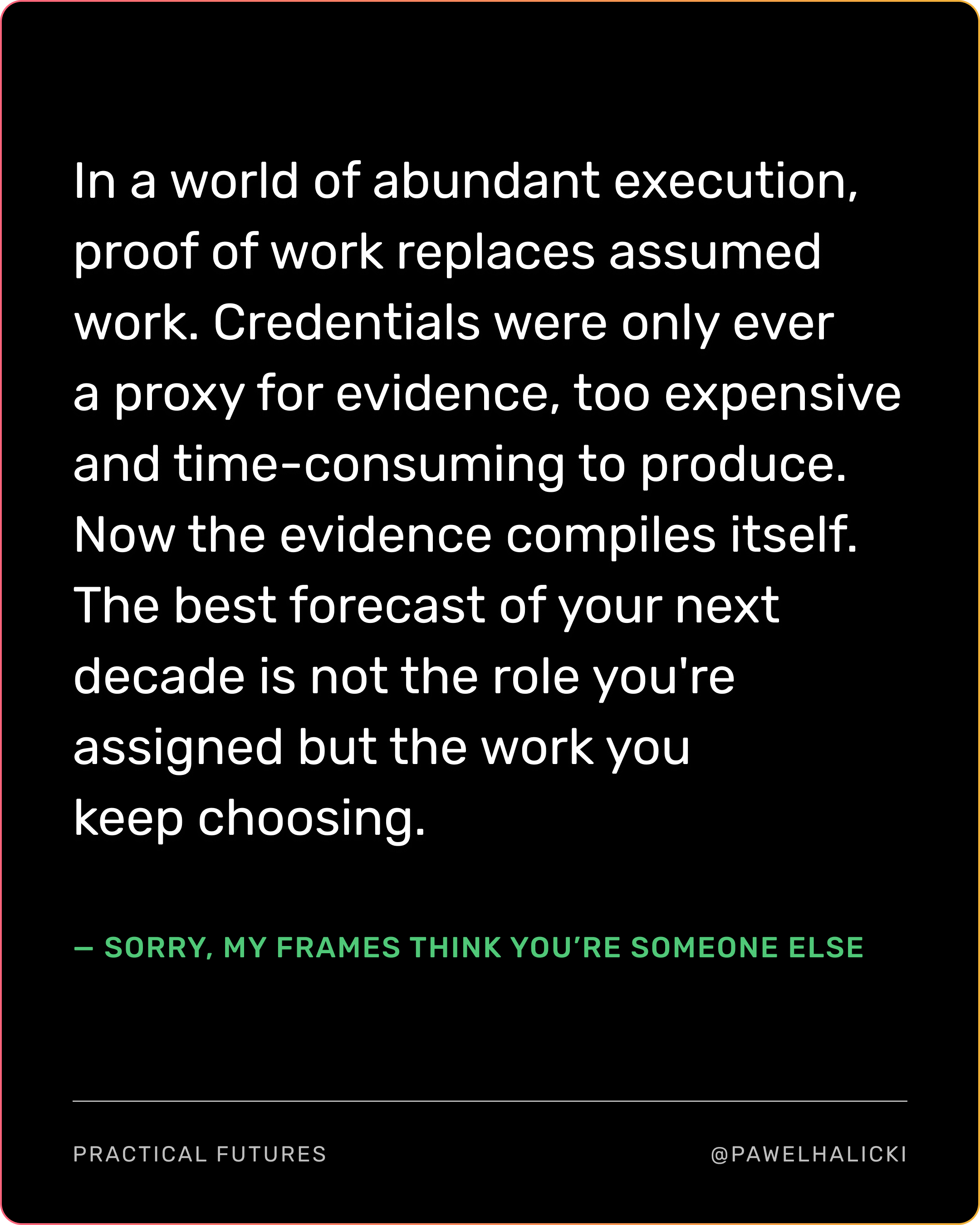
Each memory from the future you build sharpens your strategic instincts for the decisions ahead.
Build enough memories.
Shape better futures.
Press play for the whole story of Practical Futures.
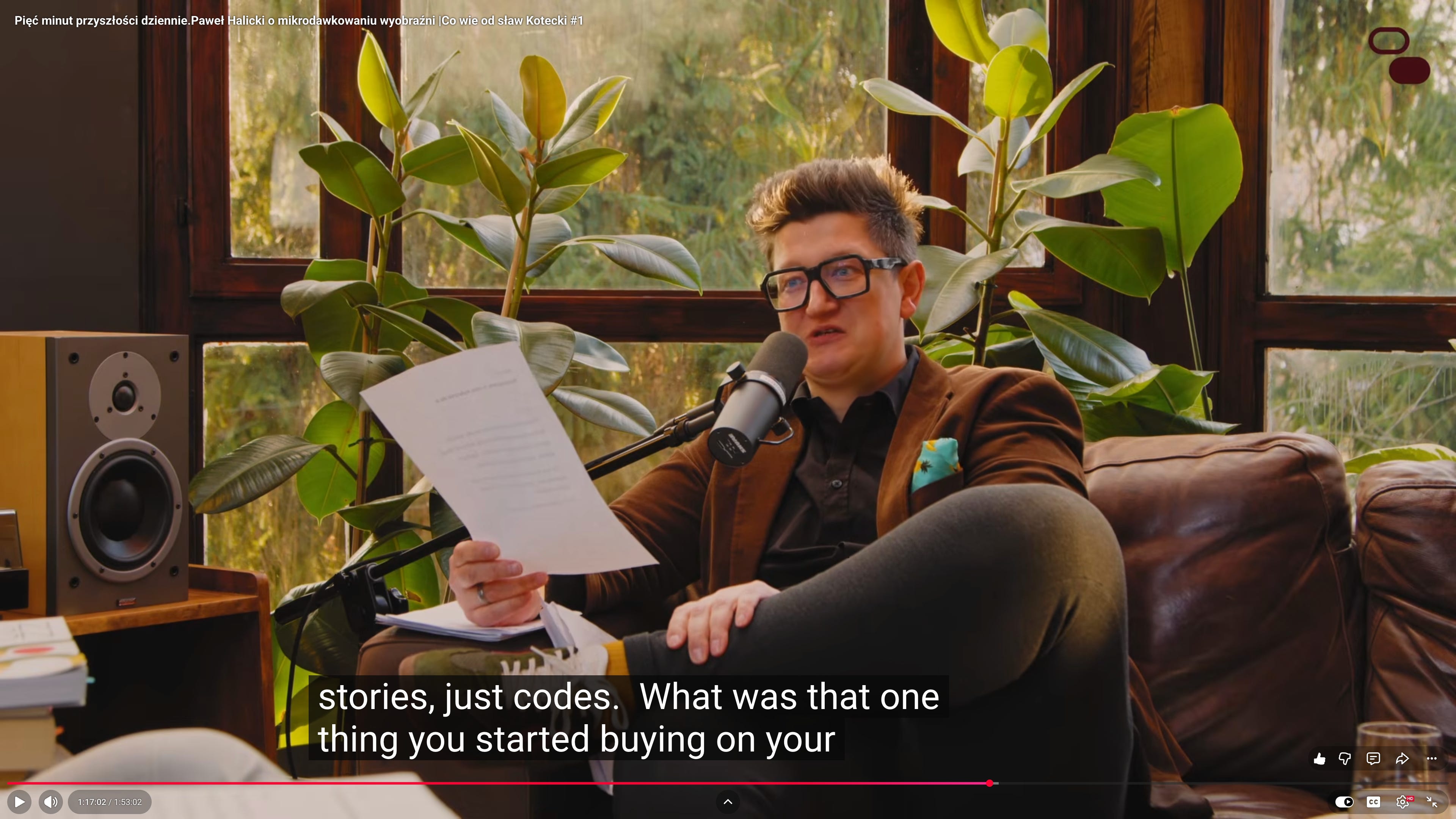
Narrative Microdosing origins explained. Find out why you should rehearse the future instead of trying to predict it. In conversation with Wiesław Kotecki, recorded in Polish, with YouTube auto-translate captions.
The science behind rehearsing the future.
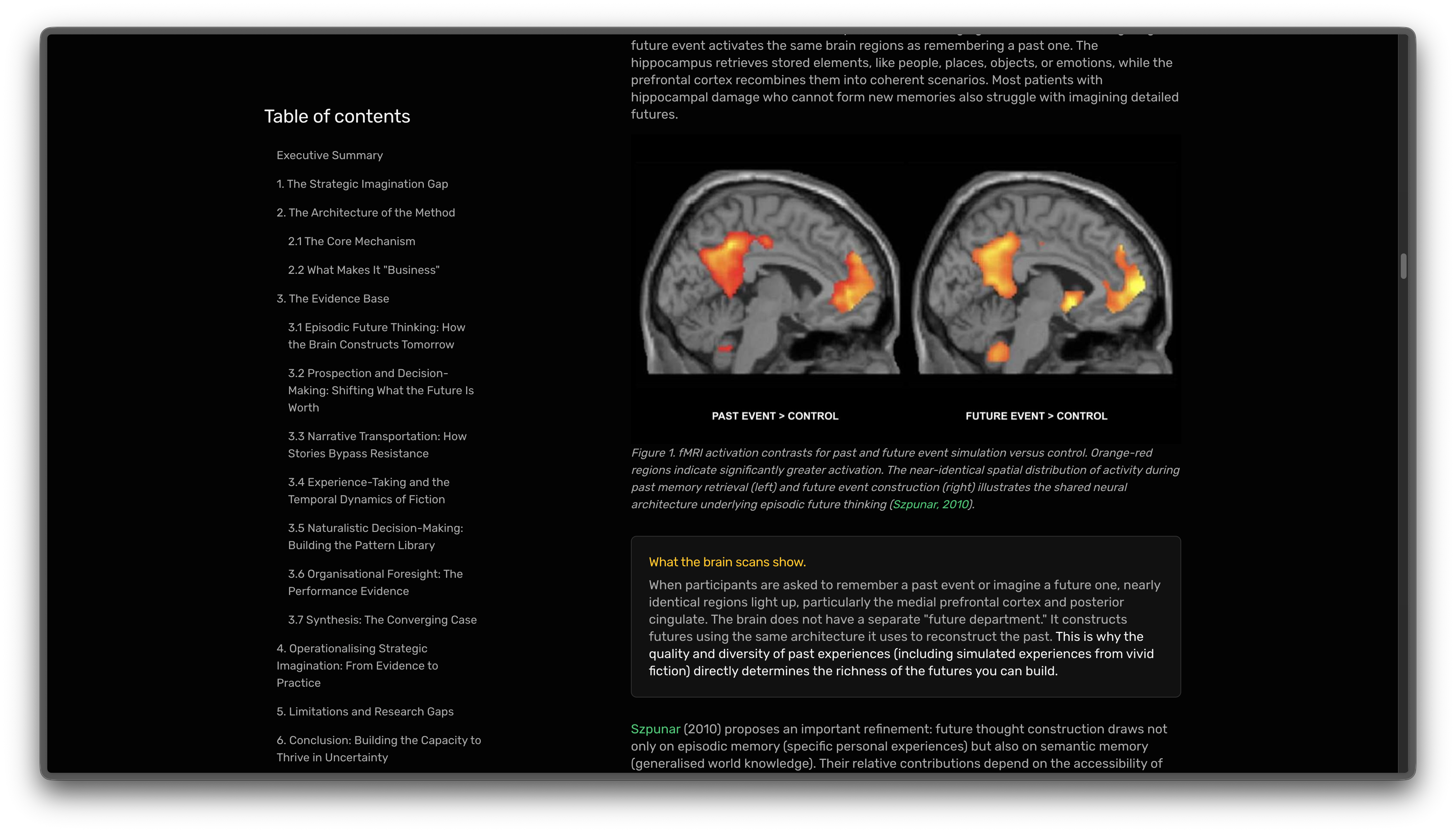
How science fiction trains your brain to thrive in a world that refuses to be predictable.
Know someone who could use more strategic imagination?
Share Practical Futures with your network.