
We got a gigagram


Evening rain pounds the windows as she tries to fit the last shelves into a bookcase. Her partner stays safely on the sofa, studying the instructions they have already agreed are wrong. Their wall screen blinks with a message.
Shared context available. 409 sources. 7.2 terabytes.
— Look. We got a gigagram.
She looks up from the shelf. — Must be their road trip. Did they flag anything?
— No. Just the whole thing.
— Great. — She reaches for their empty mugs, happy for the excuse to give up. — Let me top up those.
A blank question field opens on the wall. She calls from the kitchen.
— Ask if they found that swimming place.
— Which one? — He calls back.
— The one near the old bridge. They talked about it for weeks.
He turns back to their system. — Did they find that swimming place near the old bridge?
A route trace appears first. Then the gigagram fills the wall with footage.
The main road gives way to gravel and curves towards a tiny brick bridge. The car stops at a locked gate. One friend climbs over while the other waits beside the car, holding both pairs of shoes.
The view jumps. Cold water. A shout. A hand slips from a rock. Laughter so loud that the sound flattens for a second.
Then their room returns to normal.
— They found it. Nearly headfirst. Classic.
She hands him more tea.
— What almost made them turn back?
He glances at her. — That’s what you want to know?
— That’s what I asked.
The gigagram searches the footage and logs. A likely answer begins to play.
After dark, rain hammers the plastic roof of a charging station. One friend stands outside with both hands in their pockets. The other stares through the windscreen.
Neither looks at the other. It is the quiet aftermath of an argument, when both people have already said too much.
Three hotel options sit unanswered on the windscreen. When neither responds, they slowly dim. Then the passenger window lowers, and a travel mug appears. The friend outside takes it. The room returns.
— Fresh coffee. Works every time.
He rests his mug on his lap.
— You know they’ll see our queries? You always ask where things nearly broke.
— I like knowing why they didn’t.
— You sound like that old film where he sends her his whole summer, and she never asks the right question.
— That was not the plot. She asked what he ate.
— He spent two months waiting for her to ask whether he was lonely.
— He could have told her.
— That would have ruined the film.
He leans back onto the sofa.
— They should remake it with gigagrams.
— It would be twelve minutes long.
— Or six hours. Depends on who’s asking.
The rain drums harder against the windows.
— You barely asked my gigagram anything.
He looks at her, puzzled. — That again? I asked whether you landed.
— That was metadata.
— You had gone away for work. Landing felt relevant.
— I sent you days of my life.
— It was years ago. We had been dating for two months.
— Exactly.
— I didn’t know what I was allowed to ask.
She looks at him. — You could have asked whether I missed you.
— I thought that would be too much. At the time, not asking felt polite.
She turns the cup between her hands. — What would you ask now?
— Whether there was a moment you almost called me.
She smiles. — There were seven.
— You remember?
— I asked it later.
— Wait. You queried your own gigagram?
— I wanted to know whether I had been unreasonable.
— And?
— It found seven times I opened your contact and closed it again.
— That doesn’t answer the question.
— No. But it helped.
She turns to the gigagram still open on the wall.
— When did they first wish we were there?
The gigagram assembles an answer.
A small town square café appears in the late afternoon. Their friends sit beneath a patio heater, losing badly to the wind. One of them tears a breadstick in half and stops. Their voices emerge through the wind.
— You know, this is exactly their kind of place.
The other glances at the mismatched chairs, the handwritten menu, and the dog asleep beneath the next table.
— They would be curious why the soup changes price with the weather.
— Should we send them something?
— No. They’ll find it in the gigagram.
The scene dissolves back to their wall. She looks at him.
— That was only the third day.
— See? Practically immediately. — He gets up and carries both cups to the kitchen. — Ask if they’re coming anywhere near us on the way back.
— Are they coming anywhere near us on the way back?
Six answers spread across the wall, one for each possible route. She raises her voice towards the kitchen.
— This isn’t telling me anything. I’ll just ask.
She opens their shared chat. Before she can type, a message appears.
Is your spare room still full of boxes?
He calls from the kitchen.
— Do we have a reply?
— Better. We have guests.

Memories to build from this future
Think about the last time you came back from a trip and someone asked you about it. You gave the answer you’d already given twice that day, the same highlights in the same order. Then someone asked about the one thing you hadn’t thought to mention, and the whole conversation changed shape.
What opened you up wasn’t your telling, it was their asking.
Now, hold that feeling of being asked well:
1. Try to recall the evening you looked through everything that people close to you had asked your last trip’s gigagram.
What did each person’s first question tell you about what matters to them?
How did your own memories look different once you saw them through other people’s questions?
Which question did you quietly hope someone would ask?
2. Think back to the day you joined a project already underway and got no briefing, just the full shared context you could interrogate.
What did building your own picture, query by query, give you that someone’s walkthrough never could?
How did seeing a colleague’s queries change what you understood about how they think?
Which of your questions ended up teaching the team something about its own work?
3. Go back to an ordinary week a year after your organisation swapped polished updates for open context that answered every question straight from the record.
How did asking the right questions turn into a skill people became known for?
What did the aggregated queries reveal about what the organisation truly cared about?
Where did trust grow first once everyone’s work carried its whole context with it?
Last thing on this one:
If every question you asked over the past month were laid out in front of you, what would the list say about what you truly care about?
What would you be curious to ask more often? And does anything from this one connect to threads from other sessions?
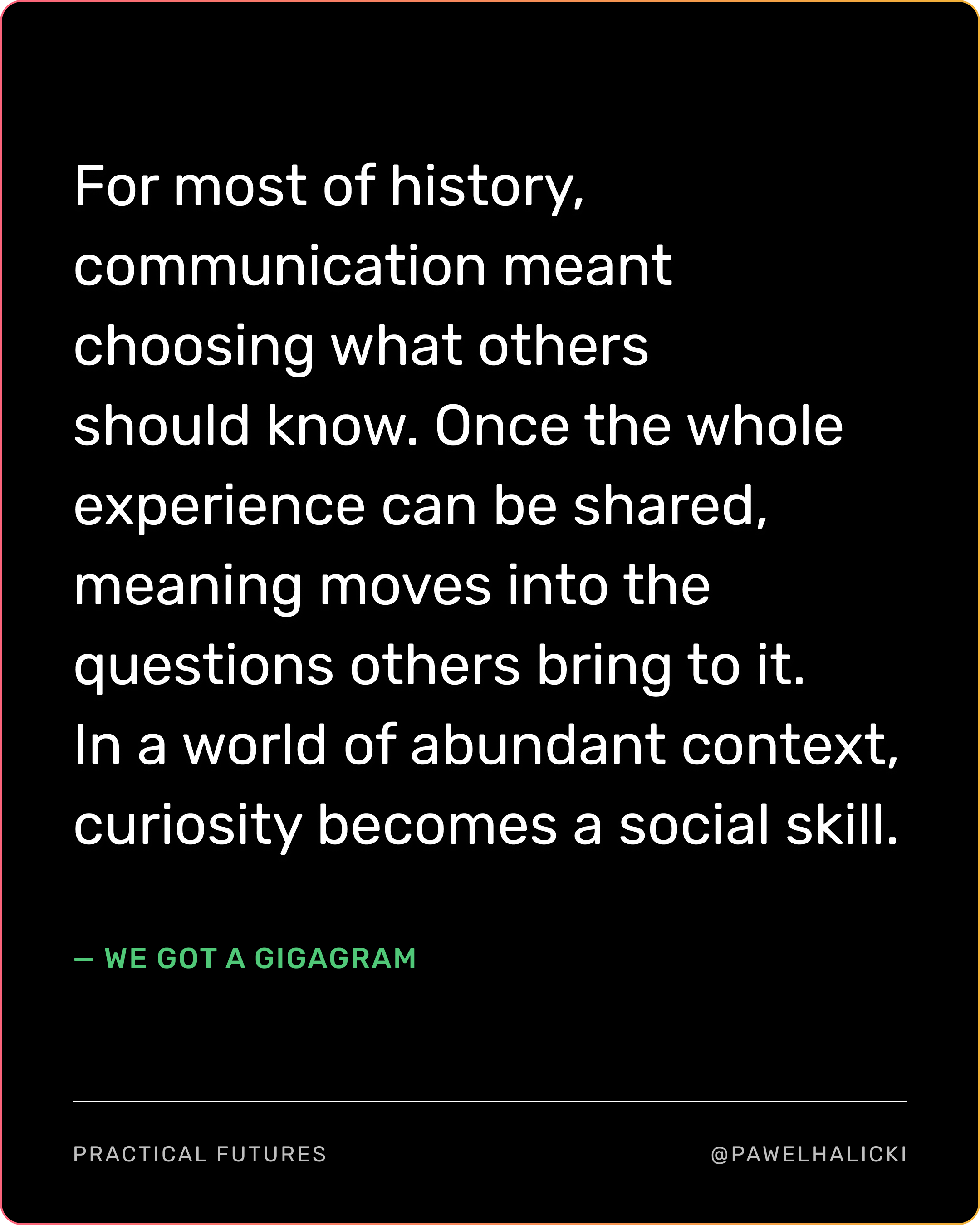
Each memory from the future you build sharpens your strategic instincts for the decisions ahead.
Build enough memories.
Shape better futures.
Press play for the whole story of Practical Futures.
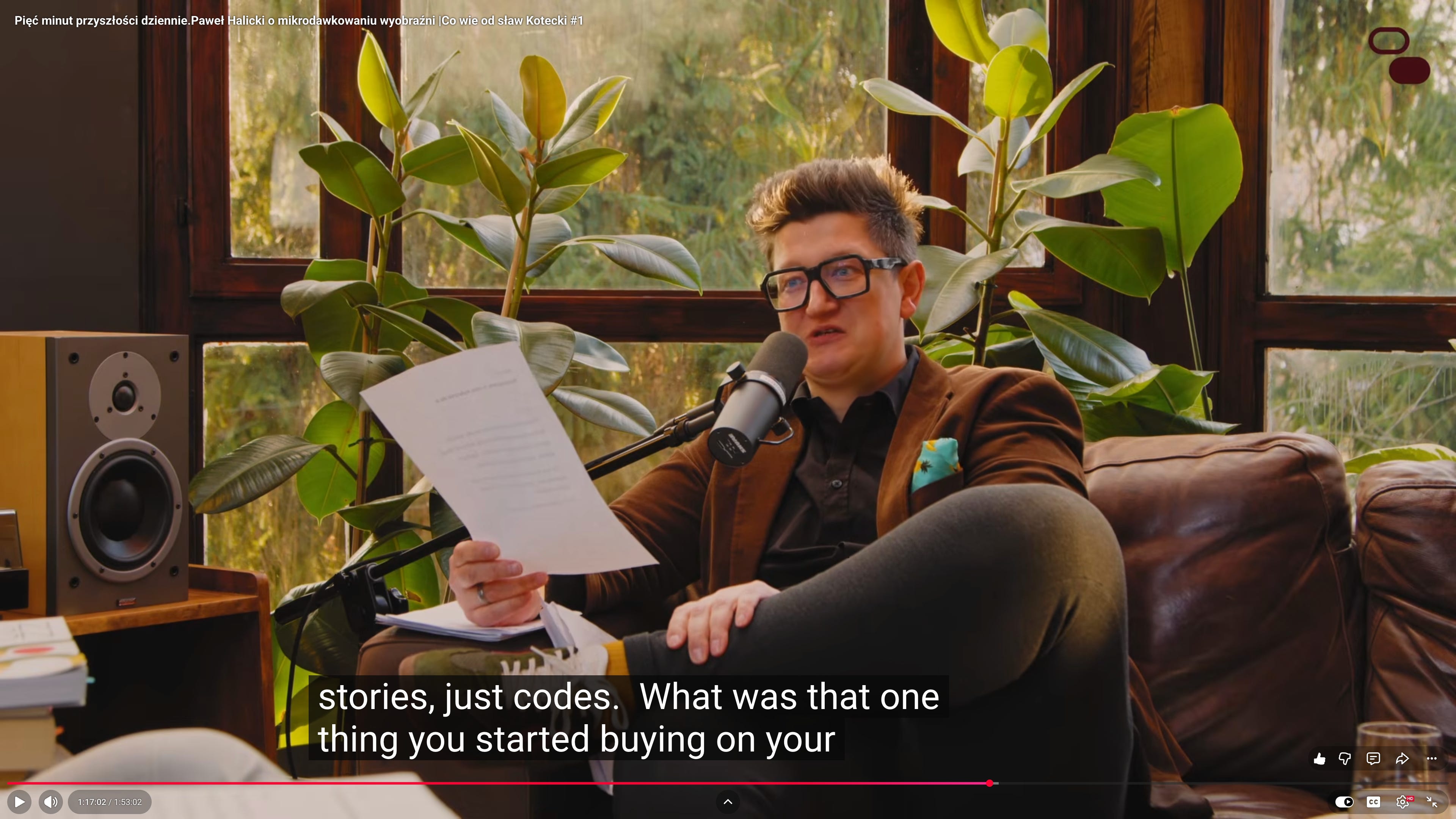
Narrative Microdosing origins explained. Find out why you should rehearse the future instead of trying to predict it. In conversation with Wiesław Kotecki, recorded in Polish, with YouTube auto-translate captions.
The science behind rehearsing the future.
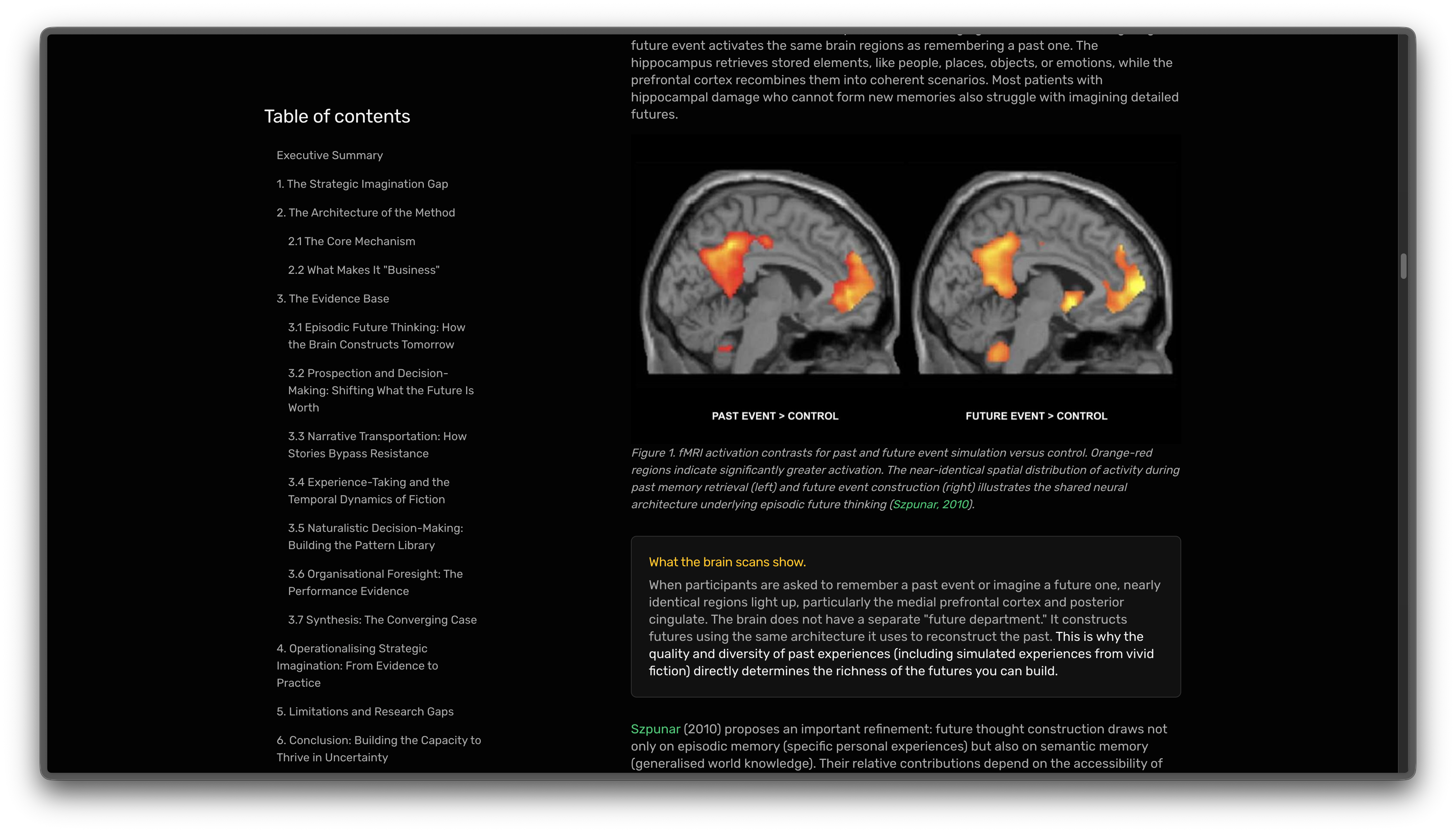
How science fiction trains your brain to thrive in a world that refuses to be predictable.
Know someone who could use more strategic imagination?
Share Practical Futures with your network.